The Architecture of Calm: Why Minimalism is a Wellness Essential
In the geography of a home, the coffee table serves as the primary visual and functional anchor of the living room. However, without intentional selection, this central piece often introduces “spatial compression”—a density of form that heightens domestic stress. As a senior interior architect, I view the center of the room not merely as a furniture placement zone, but as a site for neurological reset. When the sightlines of a room are interrupted by haphazard furniture, the mind perceives it as “visual noise,” a phenomenon documented in a 2025 study in the Journal of Environmental Psychology linking home clutter to elevated cortisol levels and diminished well-being.
Our mission is to move beyond mere aesthetics toward a human-centric design philosophy. By evaluating a table’s spatial geometry and material integrity, we can solve the emotional puzzle of modern living. A well-chosen table serves as a “reset button,” smoothing traffic paths and allowing a room to “exhale.” Whether you are navigating a restricted urban footprint or an expansive, airy interior, the following selections represent the pinnacle of intentional design.
1. The Sustainable Heirloom: Sundays Form Coffee Table
The foundation of a grounded home environment begins with material integrity—specifically the use of solid oak. Beyond its timeless character, oak offers “tactile grounding”; its natural hygroscopic properties and high density provide a physical presence that engineered materials cannot replicate. The Sundays Form table is a masterclass in this grounded atmosphere, finished with a light-diffusing matte lacquer that preserves the wood’s organic grain.
From an architectural standpoint, the Form table is an ideal solution for families. Its thoughtfully rounded corners eliminate the “visual hardness” of sharp edges, facilitating a safer environment while improving the visual flow around the seating group. A critical, often overlooked technical detail is the inclusion of discreet glides on the base, ensuring floor protection—a vital consideration for maintaining the integrity of high-end finishes.
Sustainable Attributes:
- Certified Sourcing: Crafted from FSC, NHLA, PEFC, and Rainforest Alliance certified solid oak.
- Eco-Packaging: Shipped in environmentally conscious materials to reduce the home’s waste footprint.
- Reforestation: The brand actively plants trees to offset production, ensuring a circular life cycle.

View details for: Wood Lift Top Coffee Table with Storage.
Where solid wood provides traditional weight, the next advancement in modern minimalism utilizes industrial innovation to reduce a piece’s physical footprint without sacrificing stability.
2. Urban Innovation: The Sabai City Table
Ethical modern design is increasingly defined by “urban-sourced” materials—the practice of reclaiming value from our immediate environments. The Sabai City Table is a testament to this shift, utilizing carbon-smart wood sourced from urban fallen trees in Baltimore. This choice transforms a piece of furniture into a narrative of renewal, offering the homeowner a profound sense of purpose.
The architectural “So What?” of the City Table lies in its marriage of reclaimed wood and recycled steel. Recycled steel provides exceptionally high-tensile strength in a slim profile, allowing the table to maintain a minimal “visual weight” while remaining incredibly sturdy. Its modularity—featuring six different top and leg combinations—allows for a personalized fit that matches the specific scale of a home, preventing the furniture from overwhelming the existing architecture.

View details for: Lift Top Coffee Table.
This pursuit of personalized, low-clutter environments leads us to the concept of “Zero Waste” craftsmanship, where material history meets modern health standards.
3. The Sculptural Anchor: Avocado Zero Waste & Truss Designs
Strategic interior architecture often relies on “Heirloom Minimalism”—pieces engineered to endure for generations rather than fleeting seasons. Avocado’s furniture represents this philosophy, particularly through their status as a B Corp and a member of 1% for the Planet. While the Truss Coffee Table offers mid-century sculptural elegance, the Zero Waste table provides a raw, upcycled appeal that diverts 90% of manufacturing waste from landfills.
A critical architect-led benefit of these designs is the focus on indoor air quality. Traditional furniture finishes often contribute to “Sick Building Syndrome” through the off-gassing of volatile organic compounds. By utilizing zero-VOC ECOS wood stains and non-toxic glues, Avocado solves a hidden health problem, ensuring the “visual quiet” of the room is matched by a breathable, healthy atmosphere for families and pets.

View details for: Coffee Table for Living Room.
While these solid forms provide a permanent anchor, functional serenity often requires the delicate balance of hidden utility.
4. Functional Serenity: The Burrow Carta Table
The philosophy of “Hidden Function” suggests that a table should serve as a high-utility solution without looking bulky. The Burrow Carta Table embodies this, drawing inspiration from Japanese compartmentalization. It addresses the modern challenge of “Spatial Compression,” where a single living area must transition between a dining zone, a home office, and a relaxation sanctuary.
The Carta’s internal storage allows for the immediate concealment of remotes, chargers, and “knick-knacks,” creating the visual quiet necessary for mental decompression. Its removable trays enhance this flexibility, serving as portable surfaces for dining or laptops. It is a sophisticated solution for those who require their environment to be high-performing yet visually silent.
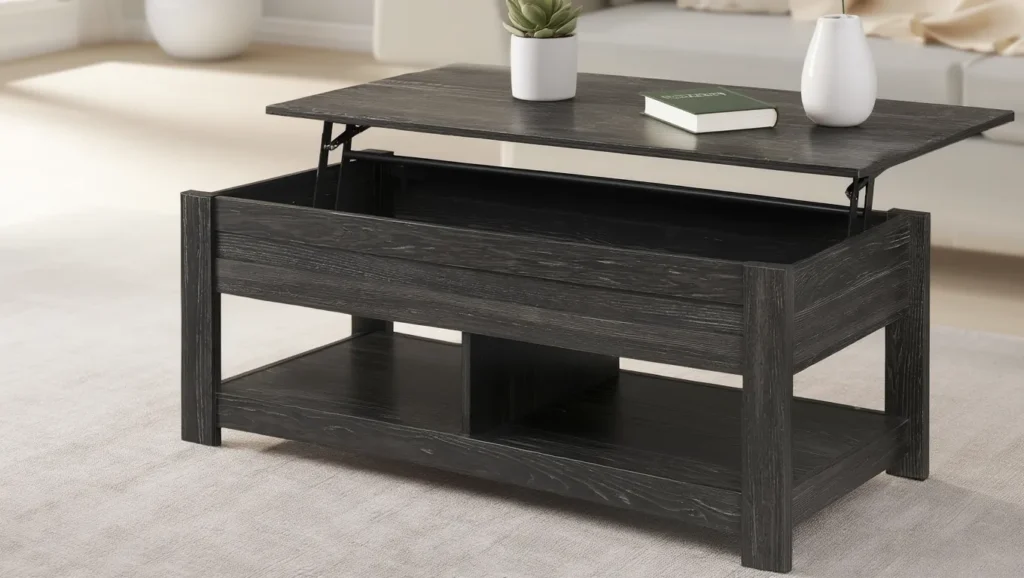
View details for: Lift Top Coffee Table with Hidden Compartment.
This requirement for flexibility is mirrored in the geometry of nesting arrangements, which adapt to the shifting needs of social life.
5. Spatial Versatility: Hardman Design Arlen Nesting Tables
In modern homes with shifting layouts, modularity is a strategic essential. The Hardman Design Arlen Nesting Tables, handcrafted in Ukraine by a team of skilled artisans, offer a solution for what I term “Social Geometry.” This set accommodates varying guest counts by allowing the smaller table to be tucked away for daily use and expanded during hospitality, preserving permanent floor space.
The Arlen set also celebrates “Wabi-Sabi”—the beauty of imperfection. The artisans use European Walnut or Oak and intentionally stabilize natural knots with dark epoxy resin. Rather than hiding these variations, the resin celebrates the knot, highlighting the wood’s life story. This textural honesty adds a layer of depth to the room, ensuring a minimalist space feels curated and rich rather than sterile.

View details for: Solid Nesting Table Set of 3.
Transitioning from nested wood, we find that texture can also be utilized to solve the unique problems of high-traffic, compact layouts.
6. The Small-Space Specialist: Povison Round Fluted Storage Table
In narrow or compact floor plans, the “Space-Conscious DNA” of a table is paramount. Round silhouettes are strategically superior in these environments because they eliminate sharp corners, smoothing traffic paths and preventing a “cramped” sensation. The Povison Round Fluted Table utilizes its fluted texture to add sophisticated visual interest without adding the physical weight of a solid, bulky base.
The high-value solution here is the inclusion of two hidden drawers. This functional capacity allows studio dwellers to maintain a “Ready-To-Live-In” state, providing a discrete home for essentials so that the small footprint remains a sanctuary. By lifting the fluted form on slender legs, Povison creates a sense of visual openness, making the room feel more expansive than its measurements suggest.
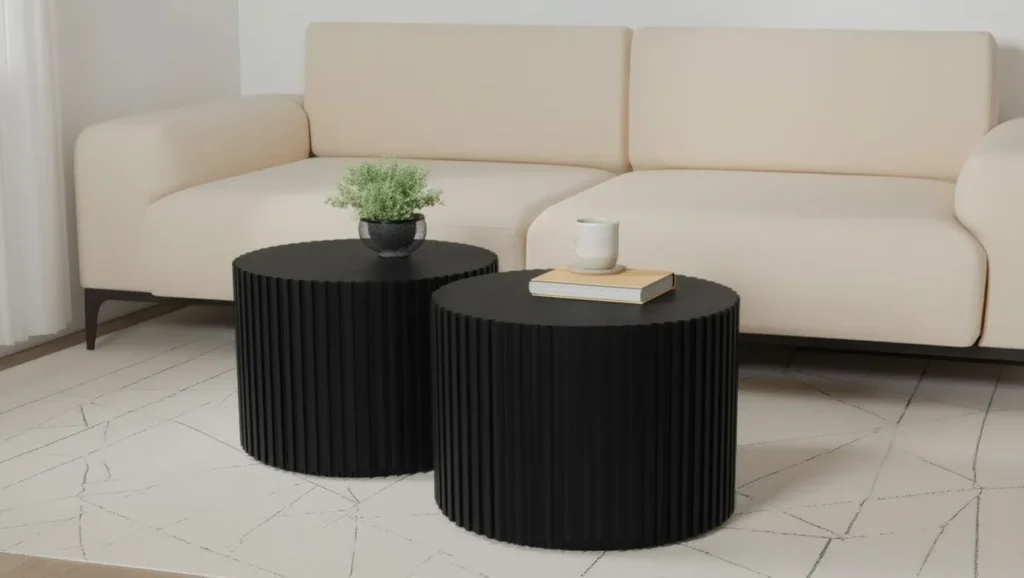
View details for: 3 Pieces Coffee Table Set.
As we move away from textured wood, we reach the peak of “Emotional Design” through the flowing lines of organic forms.
7. The Emotional Center: Nordic “Cloud” Coffee Table
“Emotional Design” posits that the shapes we surround ourselves with directly influence our subconscious mood. The Nordic “Cloud” Coffee Table uses organic, soft lines to reduce visual tension. Unlike rigid, geometric furniture that can feel confrontational, the cloud form creates a sense of lightness and ease, fostering a serene atmosphere that encourages inhabitants to relax.
In open-plan living, this design is particularly effective. Its low profile and airy feel keep it from acting as a barrier, ensuring that the room’s energy flows freely. It is the definitive choice for the modern minimalist who prioritizes atmosphere and a “comfort-first” lifestyle over bold, aggressive statement-making.
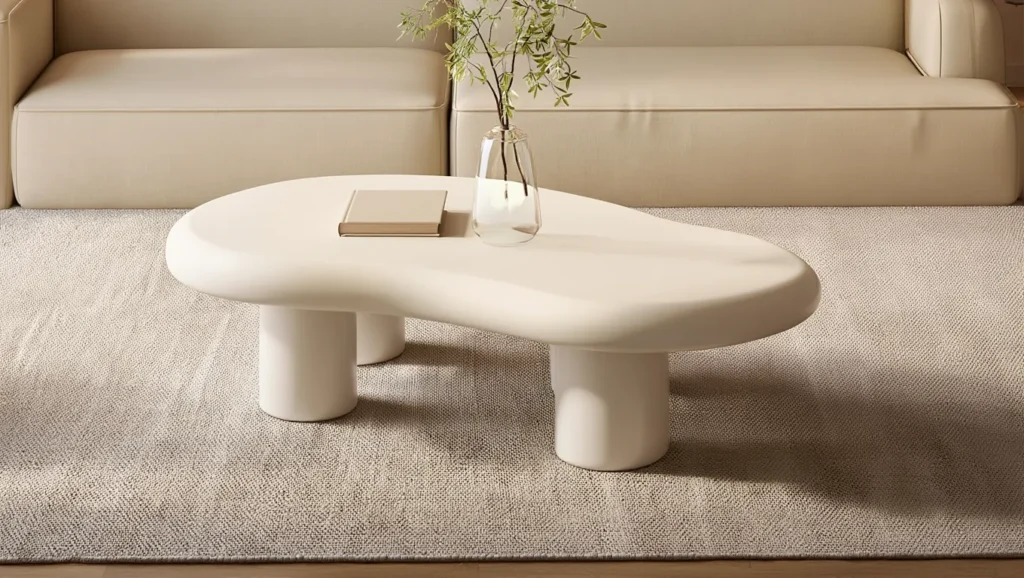
View details for: Cloud Coffee Table.
While soft shapes provide emotional lightness, transparent materials offer a literal, ghost-like expansion of space.
8. The Invisible Table: Clear Acrylic and Glass Solutions
Transparency is a strategic “Designer’s Trick” used to virtually expand a floor plan. Acrylic and glass tables allow the eye to travel through the piece to the floor beneath, which is essential when you want to showcase a high-quality rug or keep a small room from feeling congested.
The trade-off is maintenance; however, the psychological benefit of a room that feels twice as large often outweighs the need for frequent dusting.

View details for: Glass Coffee Table, Clear Coffee Table.
Pro-Tips for Styling Transparent Tables:
- The Grounding Rule: Always place a rug underneath a transparent table. This “grounds” the piece, preventing it from feeling like an invisible, floating obstacle.
- Intentional Grouping: Use a single, high-quality tray in marble or wood to group small items.
- Negative Space: Keep 70% of the surface empty to maintain the “invisible” effect.
The Golden Rules of Minimalist Proportion and Styling
Even the finest table will fail to provide calm if the “Spatial Math” is incorrect. To ensure ergonomic comfort and visual balance, adhere to these professional architectural standards:
- The Clearance Rule: Maintain a distance of 14 to 18 inches between the sofa and the table. A 16-inch (40 cm) gap is the professional baseline for comfortable circulation.
- The Two-Thirds Ratio: For visual harmony, the coffee table should be approximately one-half to two-thirds the total length of your sofa.
- The Seat-Level Standard: For optimal ergonomics, the table height should be level with your sofa seat or up to two inches lower.
Minimalist Styling Formulas for Mental Clarity:
- The Sculptural Pair: One low tray + one tall sculptural object + 70% negative space.
- The Weighted Stack: Two neutral-toned books + a small candle + an empty surface to show the wood grain.
- The Organic Minimalist: A single green branch in a slender vase + a small lidded box for remotes.
Conclusion: Transforming the Heart of Your Home
A minimalist coffee table is more than a trend; it is a practical tool for an intentional life. By choosing a piece that prioritizes material integrity, spatial intelligence, and functional serenity, you transform the center of your room into a quiet anchor rather than a source of distraction.
Take a moment to assess your current center-space. By editing your environment and choosing a table that balances form with purpose, you allow your home—and your mind—to finally exhale.