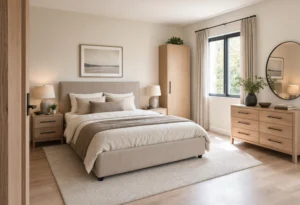
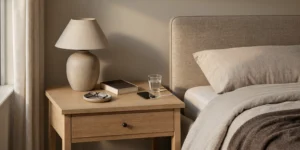
How to Style a Bedside Table That Looks Designer-Curated (Without Clutter)
A beautifully styled bedroom isn’t created by filling every empty corner with décor. In fact, the rooms that feel the most peaceful often have the least visual noise. One of the easiest places to see this principle in action is the bedside table.
Although it’s a relatively small piece of furniture, your bedside table plays an important role in both the appearance and function of your bedroom. It’s where you place your book before falling asleep, reach for a glass of water in the middle of the night, and keep the essentials you use every morning. Because it’s part of your daily routine, it deserves more thought than simply becoming a place where random items accumulate.
Many decorating guides suggest adding a lamp, a candle, a plant, or a stack of books. While these ideas are useful, they don’t explain why certain arrangements feel calm and inviting while others appear cluttered. Interior designers focus less on the number of decorative objects and more on balance, proportion, and purpose, creating bedside tables that look curated without sacrificing practicality.
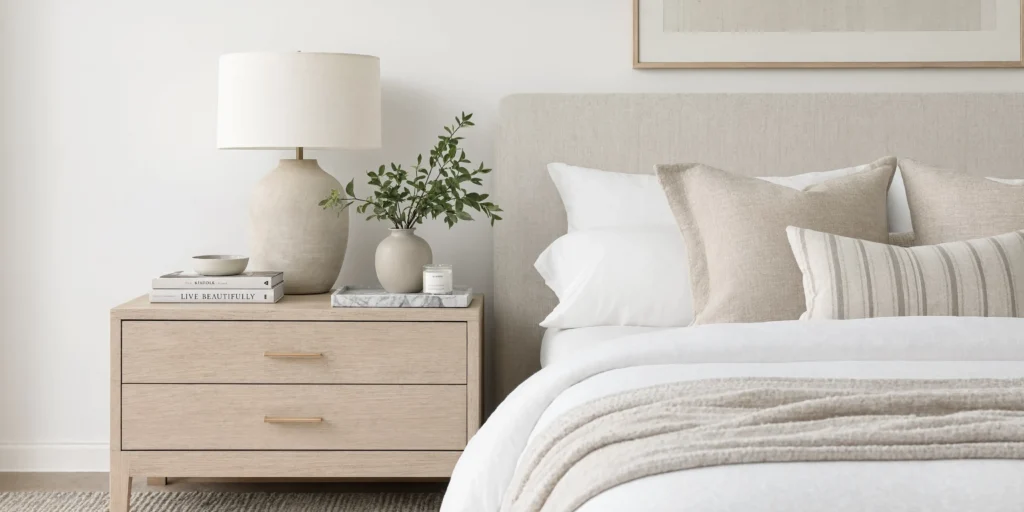
Why Most Bedside Tables Feel Cluttered
Clutter doesn’t always come from owning too many things. More often, it happens because too many objects compete for attention on a surface that was never designed to hold them all.
Think about a typical bedside table.
A large lamp sits beside a charging cable. A water bottle shares space with reading glasses, tissues, skincare products, loose coins, and a half-finished novel. Individually, each item has a purpose. Together, they create visual tension that makes the entire bedroom feel busier than it really is.
Professional designers approach bedside styling differently. Instead of asking,
“What else can I put here?”
they ask,
“What actually belongs here?”
That simple shift changes everything.
Rather than decorating first and organizing later, they begin by identifying the essentials needed for everyday life. Decorative elements are then layered around those essentials instead of competing with them. This creates a bedside table that feels intentional, functional, and visually balanced. Designers also emphasize keeping only the items you regularly use within reach, while storing everything else in drawers or concealed storage to reduce visual clutter.
Another common mistake is believing that every inch of the tabletop needs to be filled. Empty space isn’t wasted space—it’s an important design tool. The small gaps between objects allow each piece to stand out and help the entire arrangement feel calmer and more refined. This principle appears consistently in professionally styled bedrooms, where restraint is often just as important as decoration.
Stop Decorating With Objects. Start Styling With Purpose.
Instead of copying bedside table photos from Pinterest or buying accessories simply because they look attractive, try thinking about your bedside table as a collection of layers.
Each layer serves a different purpose.
Some provide function.
Some create warmth.
Some add personality.
And one of the most important layers adds… nothing at all.
It creates breathing space.
Once you understand these layers, styling becomes surprisingly simple. You won’t need expensive accessories or perfectly matching décor. You’ll know exactly what your bedside table needs—and just as importantly, what it doesn’t.
In the next section, we’ll introduce the DecorePantry Bedside Styling Formula™, a simple five-layer method that helps you create a bedside table that feels balanced, practical, and designer-curated, regardless of your decorating style.
The DecorePantry Bedside Styling Formula™
Most bedside styling guides tell you what to put on your nightstand.
We’re going to show you how to think like a designer.
Instead of collecting random decorative objects, imagine your bedside table as five visual layers. Each layer has a specific purpose, and together they create a bedside table that feels balanced, functional, and effortlessly curated.
Once you understand these layers, you can adapt them to almost any decorating style—from modern minimalist to cozy farmhouse or luxury hotel-inspired bedrooms.
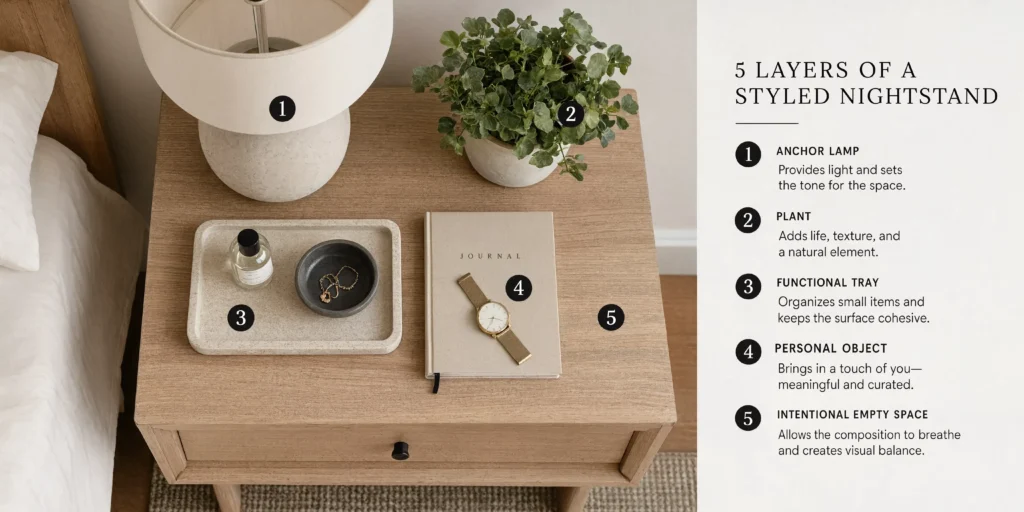
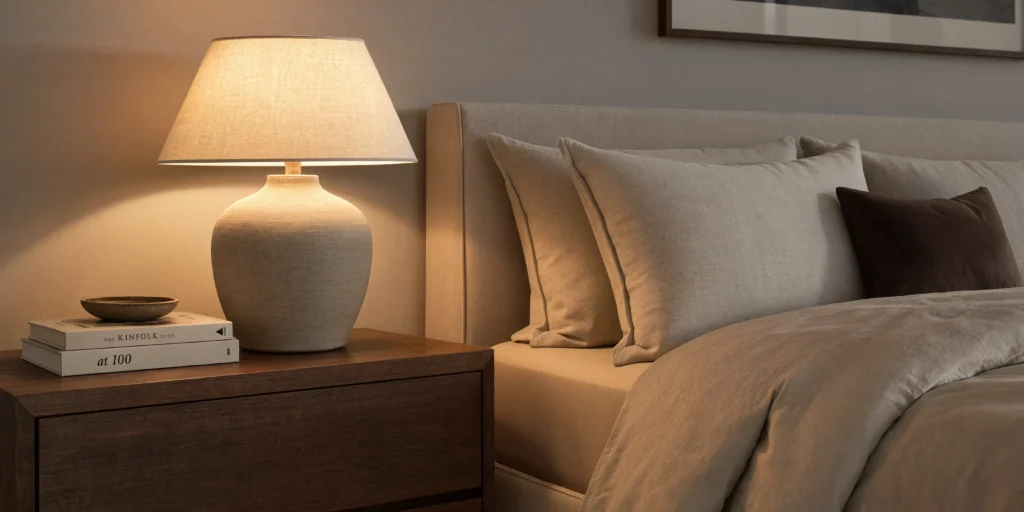
Layer 1: Create an Anchor
Every well-styled bedside table begins with one dominant element that immediately draws the eye. Designers call this the anchor because it gives the entire arrangement structure.
For most bedrooms, this will be a bedside lamp. However, a wall sconce, hanging pendant, or sculptural vase can also work if it provides enough visual height.
Choose an anchor that’s proportional to your bedside table. A lamp that’s too small can make the table feel unfinished, while an oversized lamp may overwhelm the surface. Designers also recommend ensuring your bedside light is practical for reading and positioned within easy reach.
Layer 2: Add Life
Once you’ve established height, introduce something organic.
Bedrooms often contain large, structured pieces of furniture such as beds, wardrobes, and dressers. Adding a natural element softens those clean lines and brings warmth to the space.
A small leafy plant, a simple vase with fresh flowers, or even a single stem in a ceramic vessel can instantly make the bedside arrangement feel more inviting.
If maintaining plants isn’t practical, choose preserved branches or dried botanicals rather than filling the space with unnecessary decorative objects. Current styling trends also favor meaningful natural accents over artificial filler décor.

Layer 3: Keep Daily Essentials Beautiful
This is where styling meets everyday life.
Your bedside table should support your nightly routine, not interrupt it.
Think about the items you genuinely use every day:
- Reading glasses
- A glass of water
- Lip balm
- Hand cream
- A favorite book
- A phone charger
- An alarm clock
The goal isn’t to hide everything. It’s to organize these essentials so they appear intentional rather than scattered.
A small tray is one of the simplest ways to achieve this. It groups several small items together, making the surface feel calmer while ensuring everything remains easy to find. Designers frequently recommend trays because they reduce visual clutter without sacrificing convenience.

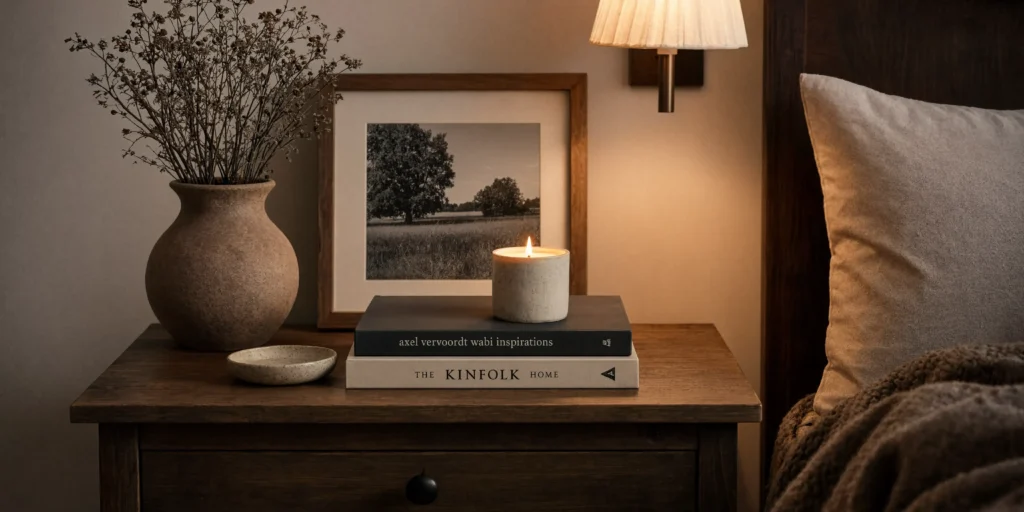
Layer 4: Add Personality
This is the layer that makes your bedside table feel like your bedroom instead of a furniture showroom.
Choose one or two meaningful objects that reflect your personality.
For example:
- A framed photograph
- A favorite novel
- A handcrafted ceramic piece
- A scented candle
- A travel souvenir
- A decorative box
Resist the temptation to display everything you love in one place. Interior designers consistently recommend selecting a few meaningful pieces rather than filling every available space. Curated objects create more character than collections of unrelated accessories.
Layer 5: Leave Room to Breathe
This is the layer that almost every decorating guide overlooks.
The final layer isn’t another accessory.
It’s empty space.
Professional designers intentionally leave portions of the bedside table uncovered because negative space allows each object to stand out. Without breathing room, even beautiful décor begins to feel crowded.
Before you add another candle, another frame, or another decorative object, ask yourself one simple question:
Does this improve the bedside table—or simply fill an empty spot?
If the answer is the second, leave the space empty.
Often, that’s exactly what the room needs.

Three Designer Looks You Can Recreate
One of the best things about the DecorePantry Bedside Styling Formula™ is that it works with almost any decorating style. The five layers stay the same—the mood changes depending on the colors, materials, and accessories you choose.
Here are three timeless looks you can recreate without completely redesigning your bedroom.
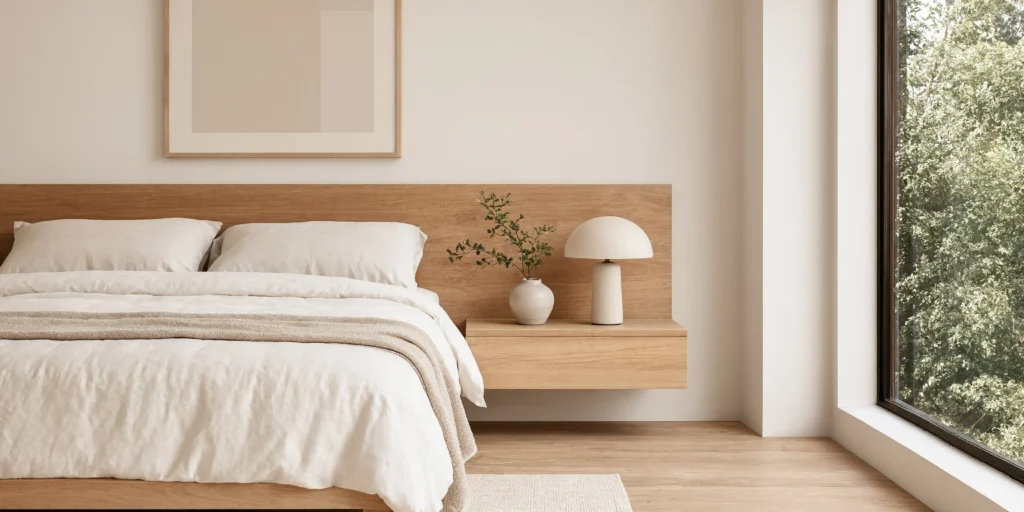
1. The Minimalist Retreat
If you love clean lines and a clutter-free bedroom, keep every layer simple.
Choose a slim table lamp with a neutral shade, a single ceramic vase, and one or two carefully selected essentials. Replace decorative collections with one meaningful object, such as a small sculpture or a favorite book.
A minimalist bedside table shouldn’t feel empty—it should feel intentional.
Stick to soft whites, warm wood tones, stone, linen, and matte finishes to create a calming atmosphere.
2. The Cozy Bedroom
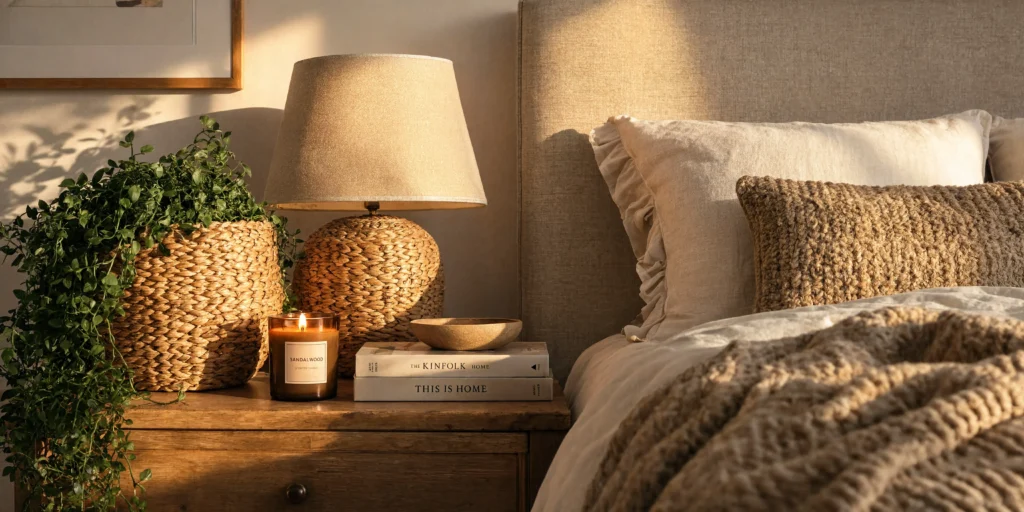
A cozy bedside table feels warm, personal, and lived in.
Instead of perfectly matching accessories, combine different textures.
For example:
- A woven tray
- A linen lampshade
- A ceramic mug
- A stack of books
- A softly scented candle
- A small trailing plant
Layering natural materials creates depth without making the surface feel crowded. Designers often use texture rather than bold colors to make bedrooms feel welcoming and comfortable.
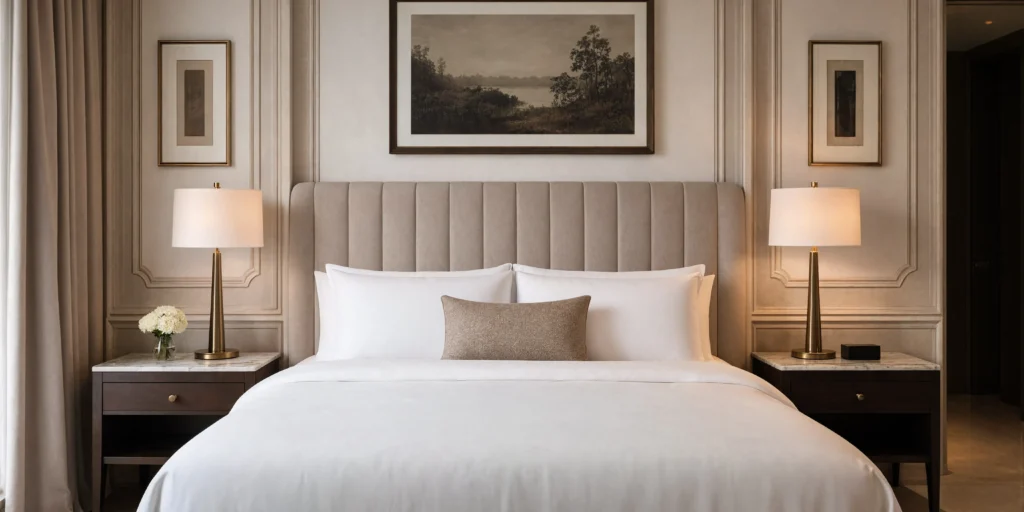
3. The Luxury Hotel Look
Luxury hotels rarely decorate with lots of accessories.
Instead, they focus on proportion, symmetry, and quality materials.
To recreate this look at home:
- Use matching bedside tables whenever possible.
- Choose lamps with substantial bases.
- Keep decorative objects to a minimum.
- Add one elegant tray for everyday essentials.
- Fold charging cables out of sight.
- Leave generous empty space around each object.
The result feels sophisticated because every item has room to stand out.
Styling Small Bedside Tables
Not every bedroom has space for a large nightstand, and that’s perfectly fine.
A smaller surface simply means every item has to work a little harder.
Instead of trying to fit everything on top, prioritize only the essentials.
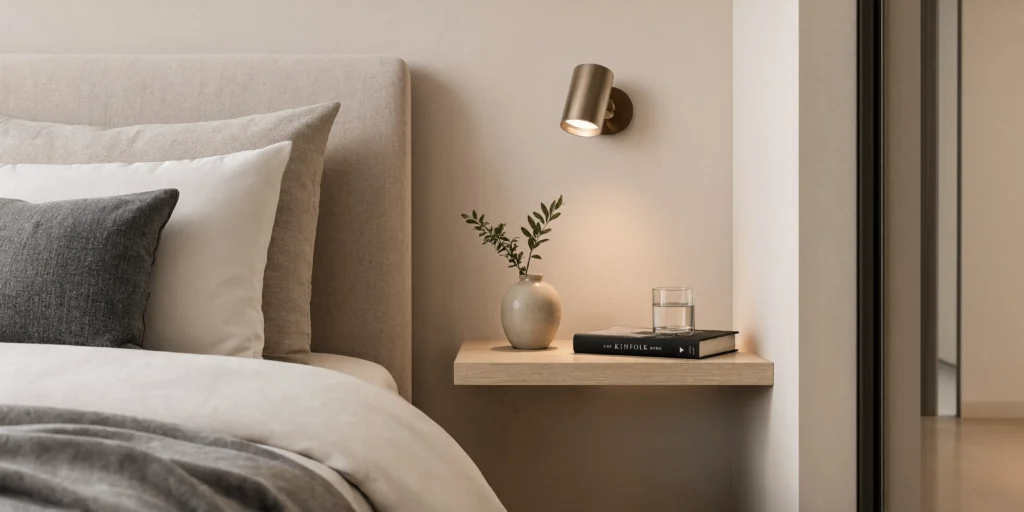
A wall-mounted reading light can free valuable tabletop space, while a floating bedside shelf or narrow ledge can make a compact bedroom feel more open and less crowded. Designers are increasingly recommending these alternatives in smaller rooms because they reduce visual weight while still providing space for nighttime essentials.
For a compact bedside table, aim to display no more than three to five visible items:
- A lamp or wall light
- One decorative object
- A book
- A small tray
- A glass of water
If you need additional storage, choose a bedside table with drawers rather than adding more containers on top. Hidden storage keeps the surface clean while making daily essentials easy to reach.
Styling Larger Nightstands
A larger bedside table gives you more flexibility, but it also creates a temptation to fill every available inch.
Resist that urge.
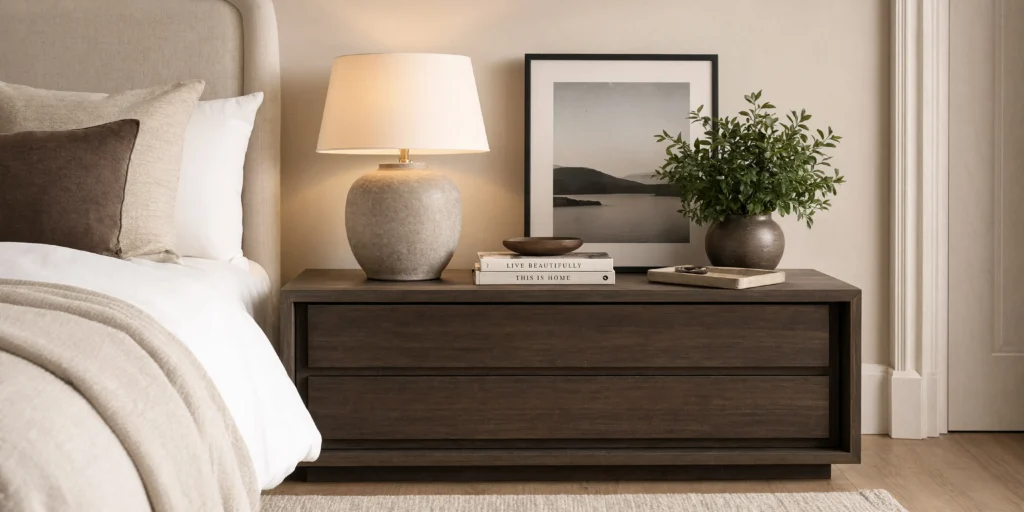
Instead of adding more accessories, think about creating small visual groupings.
For example, place a lamp at the back, a framed photo beside it, and use a tray to organize your everyday essentials. Leave the remaining space open.
Professional stylists often rely on the “rule of three,” grouping objects of different heights to create balance without overcrowding the surface. It’s a simple technique that works equally well on bedside tables and other furniture throughout the home.
A larger table should feel more spacious—not more crowded.
Common Bedside Table Styling Mistakes (And How to Fix Them)
Even beautifully chosen furniture can look out of place if it’s styled without considering scale, function, and balance. The good news is that most bedside table mistakes are easy to correct once you know what to look for.
Here are the decorating habits designers most often recommend avoiding.
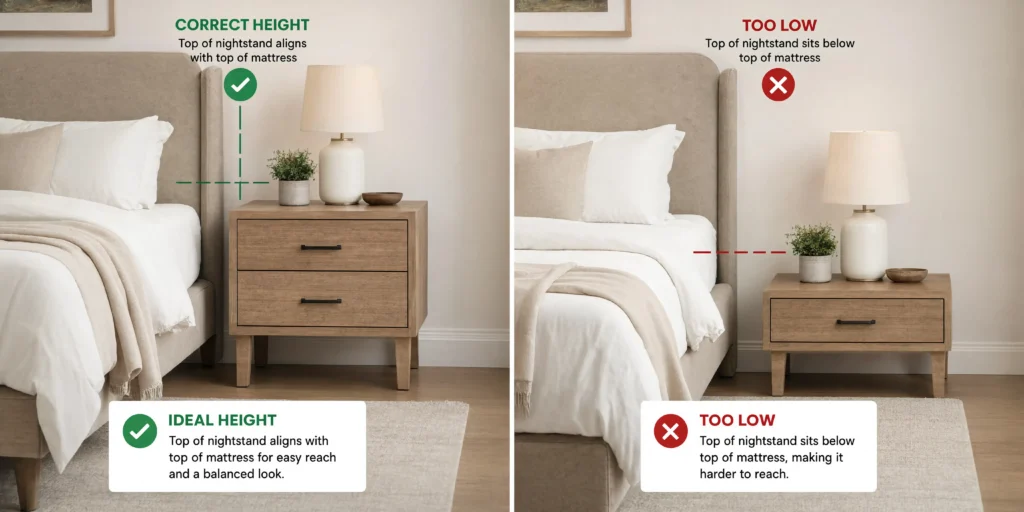
1. Choosing the Wrong Size Bedside Table
A bedside table that’s significantly lower than your mattress can feel awkward to use, while one that’s much taller may dominate the bed visually.
As a general guideline, the tabletop should sit roughly level with the top of your mattress or just a few inches higher. This keeps everyday essentials comfortably within reach and creates a more balanced look beside the bed. Designers consistently recommend measuring your mattress height before choosing a bedside table rather than relying on appearance alone.
2. Filling Every Inch of the Surface
One of the quickest ways to make a bedroom feel busy is to treat the bedside table like extra storage.
When every available space holds a candle, diffuser, stack of books, framed photo, charger, and decorative object, nothing has room to stand out.
Instead, let each item breathe.
A thoughtfully styled bedside table often looks more expensive simply because it isn’t overcrowded. Designers repeatedly emphasize that negative space is just as important as the accessories themselves.

3. Prioritizing Decoration Over Function
Your bedside table should support your everyday routine.
If you have to move three decorative objects just to put down a glass of water or reach your phone charger, the styling isn’t working.
Keep the items you genuinely use every day within easy reach, and move everything else into drawers or concealed storage. A bedside table should feel practical first and decorative second.
4. Ignoring Proportion
Scale matters more than many people realize.
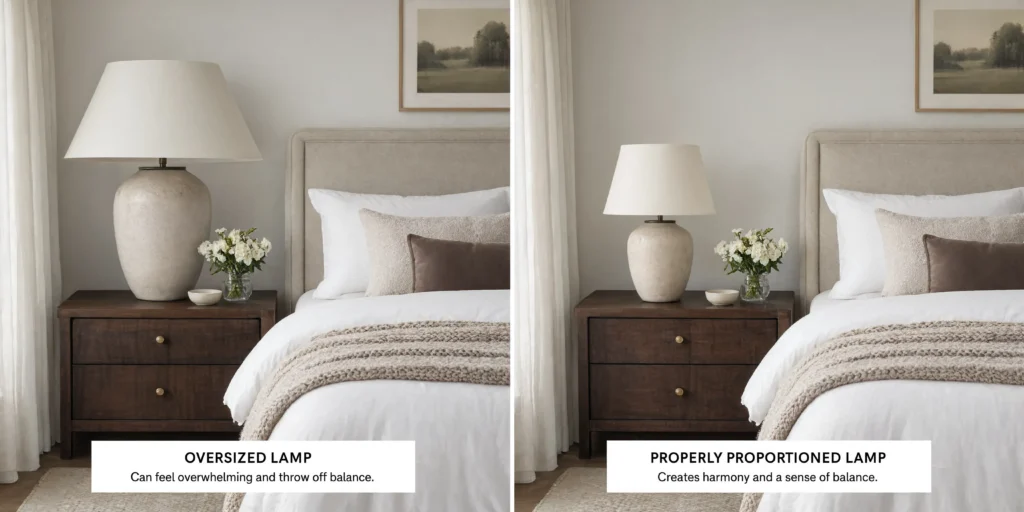
A tiny lamp beside a king-size bed can make the entire arrangement feel unfinished, while an oversized lamp on a narrow bedside table can overwhelm the space.
Instead of judging each object individually, step back and look at the bedside vignette as a whole. The bed, bedside table, lamp, and accessories should feel visually connected rather than competing with one another.
5. Displaying Everything You Own
Your bedside table doesn’t need to showcase every favorite candle, book, or keepsake.
Professional stylists edit relentlessly.
Rather than displaying many unrelated accessories, choose a small collection of meaningful pieces that complement one another in color, material, or shape. A carefully curated arrangement almost always feels calmer than a crowded display.
A Quick Bedside Styling Checklist
Before you consider your bedside table finished, take a minute to review this checklist.
✓ Is the bedside table the right height for your bed?
✓ Does it include one clear focal point?
✓ Have you added something natural, such as a plant or flowers?
✓ Are your everyday essentials organized instead of scattered?
✓ Is there at least one personal object that reflects your style?
✓ Have you left some empty space on the surface?
If you answered “yes” to most of these questions, you’ve already created a bedside table that feels balanced, practical, and intentionally styled.

Final Thoughts
A well-styled bedside table isn’t about owning expensive décor or copying a picture from social media. It’s about creating a space that supports your daily routine while making your bedroom feel calmer and more inviting.
The next time you’re tempted to add another decorative object, pause for a moment and ask yourself:
Does this piece add purpose, personality, or balance?
If it doesn’t, your bedside table may already have everything it needs.
The most memorable bedrooms aren’t the ones filled with the most accessories—they’re the ones where every item has earned its place.
You may also enjoy:
👉 How Many Pillows Should Be on a Bed? The Complete Designer’s Guide (2026)