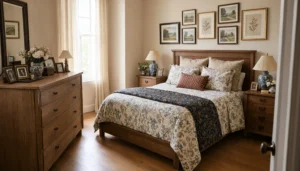
1. Introduction: The “Cramped” Paradox
Why do some small apartments feel like a boutique hotel, while others feel tight and restless?
It’s not about square footage.
It’s not about money.
It’s about how your brain reads the room.
In neuro-design (a concept rooted in neuroarchitecture), our spaces directly affect cortisol levels, mood, and emotional safety. A small bedroom can either feel cramped — or deeply comforting.
The difference?
Sensory control.
When people search:
- how to make a small room feel cozy
- small bedroom sanctuary ideas
- how to make small apartment feel bigger
They are really asking how to make a space feel emotionally safe.
A sanctuary is not about decor trends.
It’s about calming the nervous system.
2. Stop Using “The Big Light” (And How to Reset Your Mood Instantly)

The fastest way to make a small bedroom feel stressful?
Turn on the overhead light.
“The big light” floods the room from above. It mimics midday sun. It signals alertness and activity — not rest.
If you want a cozy small bedroom, stop flooding. Start layering.
Flood Lighting vs. Pool Lighting
Instead of one harsh source, create small “pools” of light:
- Floor lamp in one corner
- Table lamp near the bed
- Warm glow near seating
Research on lighting temperature shows interesting results:
- 4000K (Natural White) feels balanced and comfortable.
- 3000K (Warm White) feels more energizing and engaging.
For a calm bedroom sanctuary, use low-level lamps and soft warmth.
Think campfire — not stadium.
When people search:
- cozy bedroom lighting ideas
- small bedroom corner ideas with lamp
- what to put in corner of bedroom
The answer often starts with light.
Pro Tip: When changing lighting temperature, sit in dim light for 60 seconds before judging the mood. Your eyes need time to reset.
3. The “Cocoon Strategy”: Use Vertical Space to Feel Safe

One big mistake in small space bedroom design?
Everything sits low.
Low bed.
Low shelves.
Empty upper walls.
That empty space makes the brain feel exposed.
In evolutionary terms, we feel safest when slightly enclosed — like under a canopy.
How to Create the Cocoon Effect
- Mount curtains close to the ceiling. Let them skim the floor.
- Add tall cabinetry or a vertical shelf in empty corners.
- Hang art at eye level and slightly above.
- Use tension rods for plants or fabric layering.
When people search:
- small bedroom corner ideas Pinterest
- master bedroom corner ideas
- bedroom corner furniture ideas
They are usually responding to vertical balance — even if they don’t know it.
Vertical layering makes ceilings feel higher and rooms feel calmer.
4. Curves Over Corners: Why Sharp Rooms Feel Stressful

Most small rooms are boxes.
Square tables.
Rectangular shelves.
Hard edges everywhere.
Too many sharp angles create subtle tension. Your eyes keep stopping.
To soften a small bedroom, introduce curves.
Easy Ways to Add Visual Softness
- Round mirror on a square wall
- Oval rug under the bed
- Small armchair for bedroom with curved arms
- Round side table in a bedroom corner
If you’re searching:
- small armchair for bedroom
- bedroom corner ideas for couples
- cozy bedroom corner ideas
Try placing two small chairs angled toward each other with a round table between them. It creates intimacy without crowding.
Curves help your eyes flow.
Flow reduces visual stress.
5. The Power of Slow Decorating (Function First, Beauty Second)

Instagram shows instant transformations.
Real life doesn’t work that way.
Rooms that are rushed often feel empty. Not physically empty — emotionally empty.
Slow decorating means letting your space grow with your habits.
Before buying anything new, try this:
“Shop Your Own Home” Method
- Clear the surface completely.
- Walk into other rooms with fresh eyes.
- Look for height, color, texture.
- Move items freely — no pressure.
Searching:
- how to decorate a bedroom corner
- ideas for corner of bedroom
- bedroom corner furniture
Often means you already have what you need.
A dining chair can become a small chair for bedroom styling.
A basket becomes corner storage.
A lamp relocates and changes everything.
Function gives a room credibility.
Beauty gives it soul.
(Outbound link suggestion: After the line about slow decorating, you may insert a link to a credible article about slow living or mindful interiors — for example, a research-based blog or design psychology article.)
6. The Dynamic Gallery: Personalize Without Damage
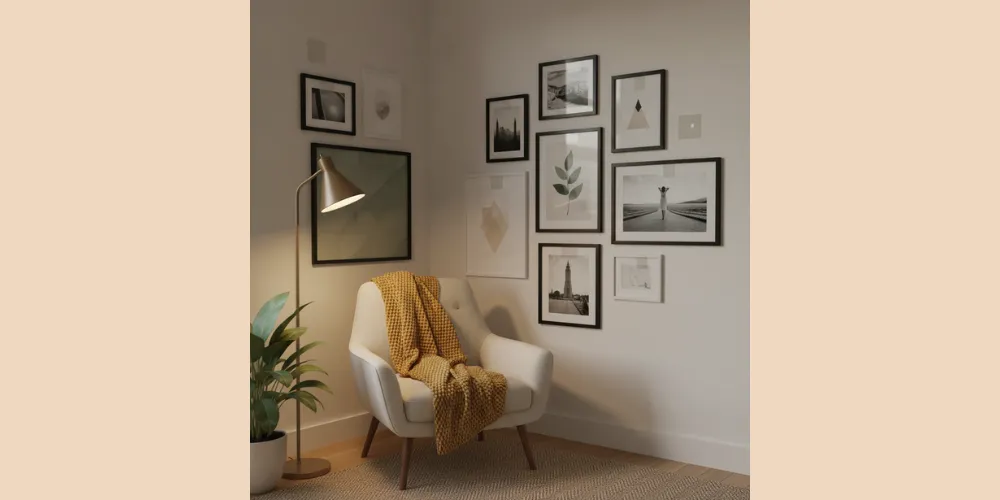
Bare walls feel cold.
But many renters hesitate to use nails.
The solution? Damage-free personalization.
Tools for a Flexible Gallery
- Adhesive strips (for framed prints)
- Adhesive hooks (heavier pieces)
- Adhesive putty (lightweight art)
- Velcro strips (for swapping)
- Tension rods (window-frame displays)
When exploring:
- Small Bedroom Corner Ideas Pinterest
- Bedroom Corner Ideas Pinterest
- living room corner ideas pinterest
You’ll notice walls complete the corner.
Pro Tip: Clean walls with rubbing alcohol. Wait one full hour before hanging art. Remove slowly by stretching downward.
This allows your home to evolve without fear.
(Outbound link suggestion: After adhesive tips, link to a reputable brand guide explaining proper use of damage-free hanging systems.)
7. Conclusion: A Small Space Can Still Feel Like a Hug

A sanctuary is not about size.
It’s about emotional regulation.
When you:
- Soften the lighting
- Use vertical enclosure
- Add curves
- Prioritize function
- Personalize safely
You turn a box into a retreat.
If your small bedroom feels “off” tonight, don’t rush to buy something.
Move one piece of furniture.
Let your brain adjust for 24–48 hours. Familiarity builds comfort.
Now ask yourself:
What piece in your home could live a second life in a different corner tonight?