Choosing the right bedroom rug isn’t just about finding a design you love. The size of the rug has a bigger impact on how your bedroom looks and feels than many people realize.
A rug that’s too small can make even a beautifully decorated bedroom feel disconnected. On the other hand, the right rug creates a sense of balance, makes the bed feel grounded, and gives you a soft surface to step onto every morning. Design experts consistently recommend choosing a rug that visually anchors the bed rather than one that simply sits beneath it.
If you’ve ever wondered:
- What size rug should go under a queen bed?
- Is an 8×10 rug big enough for a king bed?
- Should the rug go under the nightstands?
- How much rug should be visible around the bed?
- What if my bedroom is small?
You’re in the right place.
This guide doesn’t just list standard rug sizes. It explains why certain sizes work, when to break the usual rules, and how to choose the right layout for your room with confidence.
By the end of this guide, you’ll know exactly which rug size suits your bedroom—whether you have a compact guest room, a spacious primary bedroom, or something in between.
Quick Answer
If you just need the short version, here are the most common recommendations:
Bed Size | Recommended Rug Size | Best For |
Twin | 5×8 ft | Kids’ rooms and guest rooms |
Full | 6×9 ft or 8×10 ft | Smaller bedrooms |
Queen | 8×10 ft | Most standard bedrooms |
King | 9×12 ft | Primary bedrooms |
California King | 9×12 ft or 10×14 ft | Large bedrooms |
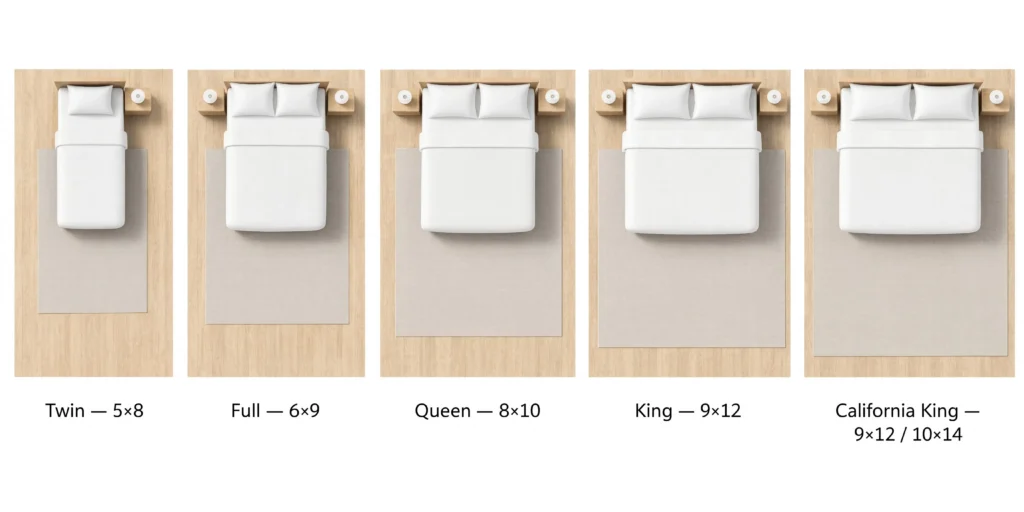
These recommendations are excellent starting points, but they’re not the whole story. Room size, furniture layout, and the way you position the rug all affect what will look best. Most design guides also recommend leaving roughly 18–24 inches of rug visible on each side of the bed whenever possible to create comfortable walking space and visual balance.
Why Rug Size Matters More Than Rug Color
When people shop for a bedroom rug, they usually focus on color, texture, or pattern first.
Ironically, those aren’t what make a bedroom feel professionally designed.
The biggest difference comes from proportion.
Think of your rug as the foundation of your bedroom. Just as a picture frame makes artwork feel complete, the rug visually frames your bed and connects it to the rest of the room.
A rug that’s too small creates the opposite effect. Instead of grounding the furniture, it looks like it’s floating beneath the bed. Interior design publications repeatedly identify undersized rugs as one of the most common decorating mistakes because they can make a room feel fragmented and even smaller than it is.
A properly sized rug helps to:
- Create visual balance throughout the room.
- Make the bed feel like the natural focal point.
- Provide a soft landing for your feet each morning.
- Add warmth, texture, and comfort.
- Make the bedroom feel larger and more cohesive.
This is why professional-looking bedrooms often have one thing in common:
They almost always use a rug that’s slightly larger than expected, not smaller.
Before Choosing a Rug, Measure These Three Things
Buying a rug without measuring your room is one of the easiest ways to waste money.
Before looking at colors or materials, grab a tape measure and note these three dimensions:
1. Measure Your Bed
Start with the width and length of your bed, including the bed frame if it extends beyond the mattress.
The rug should complement the overall footprint of the bed—not just the mattress.
2. Measure the Available Floor Space
Leave enough walking space around the room.
Avoid buying a rug so large that it touches every wall.
A small border of visible flooring around the rug usually creates a cleaner and more balanced appearance.
3. Decide How You Want the Rug Positioned
There isn’t just one correct layout.
Some homeowners place the rug completely under the bed.
Others prefer the rug to begin beneath the lower two-thirds of the bed.
In compact bedrooms, side runners can provide comfort without requiring one oversized area rug. These are all widely used placement options depending on the room layout and available space.
Choosing the layout first makes selecting the correct rug size much easier.
Bedroom Rug Size Recommendations by Bed Size
Although there are standard rug sizes for every bed, the “best” choice depends on two things:
- The size of your bedroom.
- How much of the rug you want visible around the bed.
A larger rug usually creates a calmer, more luxurious look because it visually anchors the furniture instead of making it appear to float. That’s why many designers recommend going slightly larger when your room allows.
Let’s look at each bed size individually.
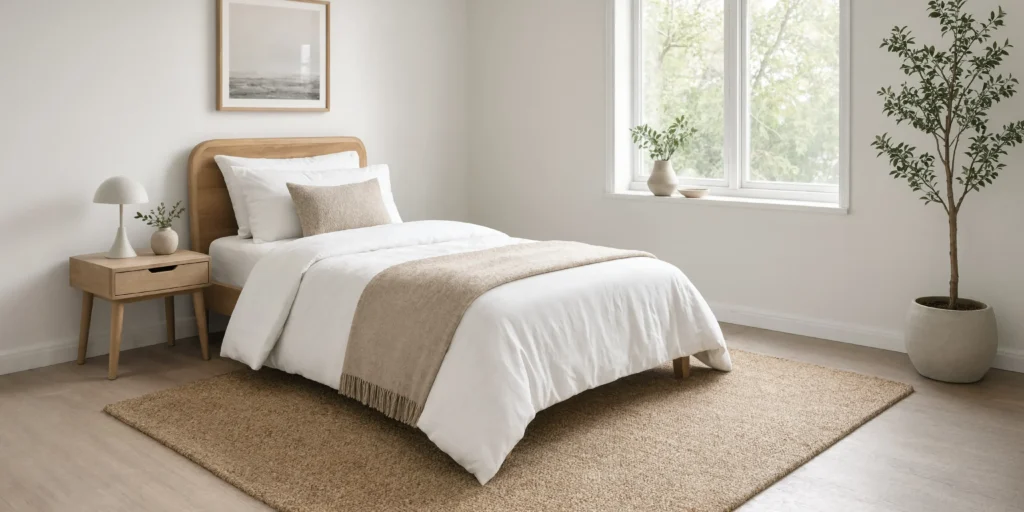
Twin Bed
Best Rug Size
5×8 ft
A twin bed is commonly found in children’s bedrooms, guest rooms, and compact apartments.
A 5×8 rug usually provides enough coverage to create a comfortable landing area beside and at the foot of the bed without overwhelming the room.
If your bedroom is especially narrow, you don’t necessarily need one large rug.
Instead, consider:
- One runner beside the bed.
- Two matching runners on each side.
- A smaller accent rug placed near the foot of the bed.
These layouts save space while still making the room feel warmer and more inviting.
Full (Double) Bed
Best Rug Size
6×9 ft
A full-size bed offers more flexibility.
For smaller bedrooms, a 6×9 rug creates balanced proportions while leaving enough visible flooring around the edges of the room.
If your bedroom has extra space, upgrading to an 8×10 rug often creates a more premium look because more of the rug remains visible around the sides and foot of the bed.
Queen Bed
Best Rug Size
8×10 ft
This is the size most homeowners eventually choose—and for good reason.
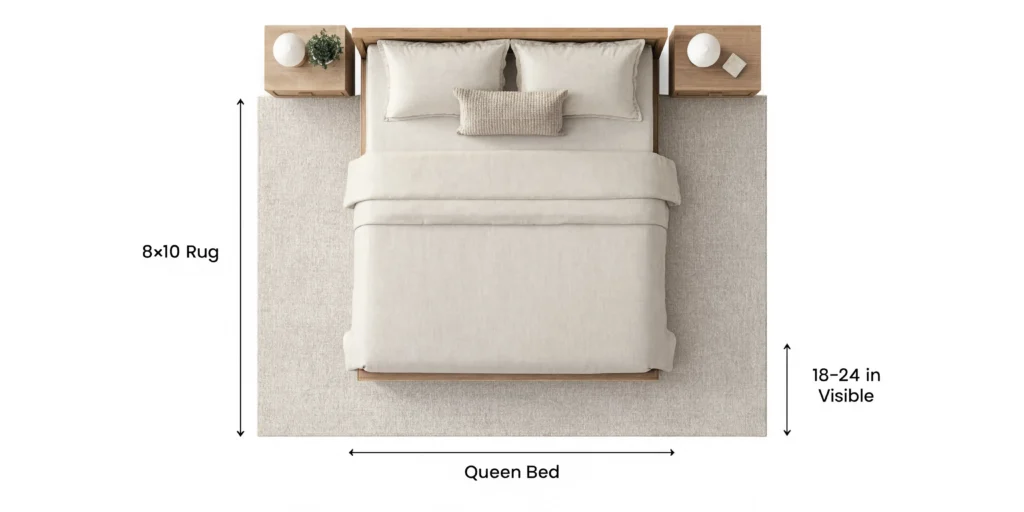
A queen bed measures approximately 60 × 80 inches.
An 8×10 rug usually provides enough visible rug around both sides and the foot of the bed to create comfortable walking space while keeping the furniture visually connected. Many current bedroom rug guides identify this as the “gold standard” for a standard queen bedroom.
A typical layout looks like this:
- Rug begins beneath the lower two-thirds of the bed.
- Nightstands usually remain on the floor.
- Around 18–24 inches of rug remains visible beside the bed.
- Comfortable surface when getting out of bed.
If your bedroom is especially large, a 9×12 rug can create an even more spacious, luxurious appearance.
King Bed
Best Rug Size
9×12 ft
A king bed naturally occupies much more floor space than a queen bed.
Because of this, smaller rugs often disappear beneath the furniture and fail to create the balanced appearance most homeowners are looking for.
A 9×12 rug is generally the safest recommendation because it extends beyond both sides of the bed and creates generous walking space. Larger primary bedrooms may even accommodate a 10×14 rug comfortably.
Benefits include:
- Better visual balance.
- Softer landing area.
- Room feels larger and more cohesive.
- Furniture appears intentionally placed.

California King Bed
Best Rug Size
9×12 ft or 10×14 ft
California king beds are longer than standard king beds, so the surrounding furniture and room dimensions become especially important.
For most large bedrooms:
- 9×12 provides excellent everyday coverage.
- 10×14 creates a hotel-inspired appearance in spacious primary suites.
Instead of focusing only on the mattress size, look at the room as a whole.
The goal isn’t to cover every inch of flooring.
The goal is to create enough visible rug around the bed to make the entire sleeping area feel connected and balanced.
Quick Reference Table
Bed Size | Ideal Rug | Good Alternative | Best For |
Twin | 5×8 | Runners | Small rooms |
Full | 6×9 | 8×10 | Standard bedrooms |
Queen | 8×10 | 9×12 | Most homes |
King | 9×12 | 10×14 | Large bedrooms |
California King | 9×12 | 10×14 | Spacious primary suites |
Designer Tip
If you’re torn between two rug sizes and your room has enough space, choosing the larger option usually creates a more balanced and intentional look. One of the most common decorating mistakes is selecting a rug that’s too small, which can visually fragment the room instead of anchoring it.
How Should You Place a Rug Under a Bed?
Choosing the correct rug size is only half the decision.
The way you position the rug has just as much impact on how balanced, comfortable, and spacious your bedroom feels.
The good news is that there isn’t one “perfect” layout. Instead, choose the option that best suits your room size, furniture arrangement, and budget.
Option 1: Full Rug Under the Bed (Best for Large Bedrooms)
This layout creates the most polished and luxurious appearance.
The rug extends beneath the entire bed and usually supports the nightstands as well.
Best for
- Large primary bedrooms
- King and California king beds
- Symmetrical room layouts
- Hotel-inspired interiors
Advantages
- Creates a strong visual anchor.
- Makes the room feel larger and more cohesive.
- Keeps all major furniture visually connected.
If your bedroom has enough floor space, this is often the most balanced arrangement.

Option 2: Two-Thirds Under the Bed (Most Popular)
This is the layout you’ll see in many professionally styled bedrooms.
Instead of placing the rug under the headboard and nightstands, the rug begins around the lower two-thirds of the bed and extends beyond both sides and the foot.
This provides softness where you actually walk while allowing you to use a slightly smaller rug.
Best for
- Queen beds
- Standard-sized bedrooms
- Most homeowners
Why It Works
- Saves money compared with oversized rugs.
- Provides a soft landing beside the bed.
- Creates balanced proportions without overwhelming the room.
This layout is widely recommended because it combines comfort, practicality, and visual balance.

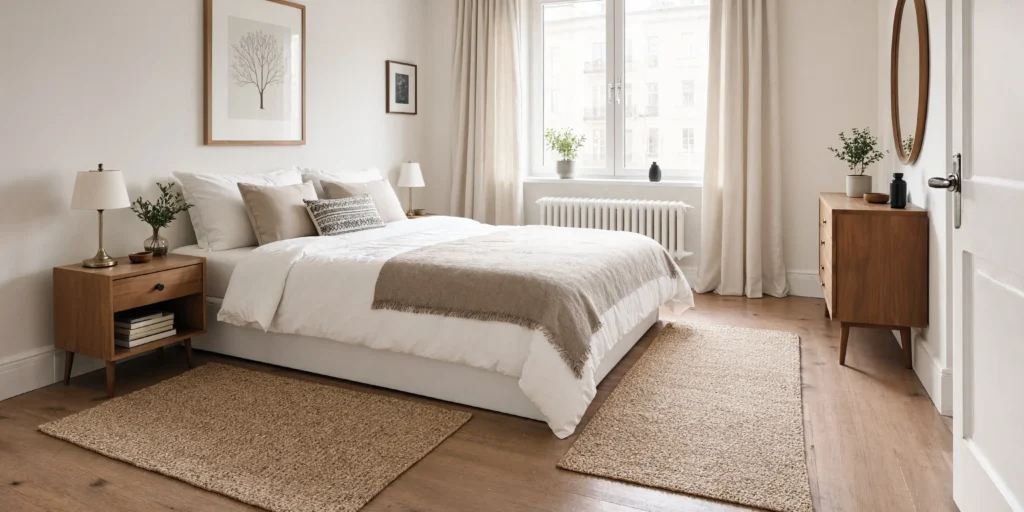
Option 3: Side Runners (Perfect for Small Bedrooms)
Not every bedroom has enough space for a large area rug.
If your room feels narrow or your budget is limited, matching runners placed beside the bed can be an excellent alternative.
They provide comfort exactly where you need it—when getting in and out of bed—without making the room feel crowded.
Best for
- Small apartments
- Guest bedrooms
- Narrow layouts
- Budget-friendly decorating
Many designers recommend runners instead of forcing a rug that’s too small under the bed, because a tiny rug can look accidental rather than intentional.
Which Rug Placement Is Right for You?
Use this simple guide:
Your Situation | Recommended Layout |
Large bedroom | Full rug under the bed |
Standard bedroom | Two-thirds under the bed |
Small bedroom | Side runners |
Tight budget | Side runners or partial placement |
Luxury look | Full coverage |
There isn’t one universally correct layout.
The best choice is the one that provides comfort underfoot while keeping the room visually balanced.

Common Bedroom Rug Mistakes to Avoid
Even an expensive rug can make a bedroom look unfinished if it’s placed incorrectly.
Here are the mistakes people make most often.
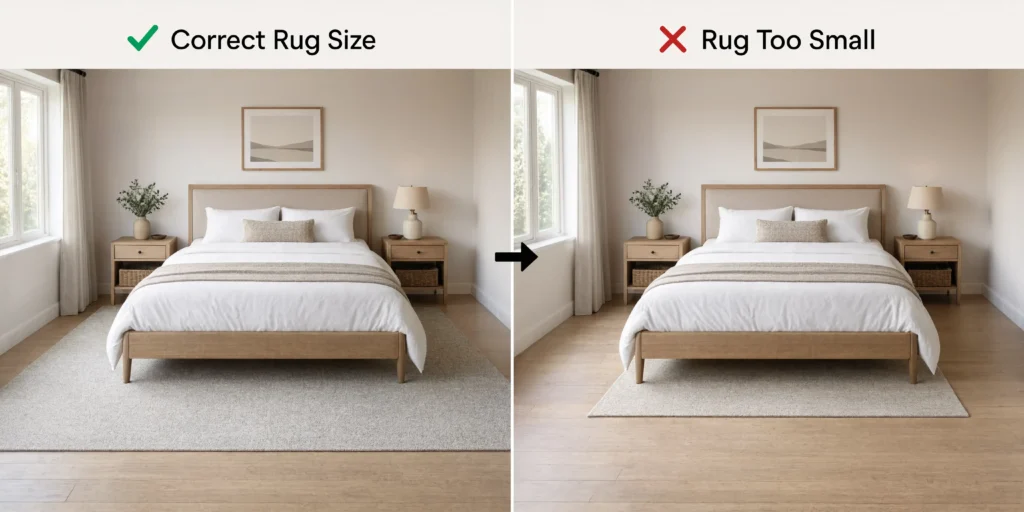
1. Choosing a Rug That’s Too Small
This is the single most common mistake.
A rug that barely peeks out from beneath the bed doesn’t anchor the room.
Instead, it makes the bed appear disconnected from the rest of the furniture.
When deciding between two sizes, the larger option usually creates a more intentional look if your room can accommodate it.
2. Covering the Entire Floor
A rug should frame the bed—not replace the flooring.
Leaving a border of visible flooring around the rug usually creates a cleaner, lighter appearance.
3. Ignoring Walking Space
Think about your morning routine.
Can you comfortably step onto the rug when getting out of bed?
If not, the placement may need adjusting.
Design guides commonly recommend leaving enough visible rug beyond the bed to create a comfortable landing area.
4. Forgetting the Rest of the Room
Your rug shouldn’t compete with the room.
It should connect the bed, bedside tables, and surrounding space into one cohesive composition.
Designer’s Perspective
When people say a bedroom feels “unfinished,” the problem often isn’t the furniture—it’s the proportions.
A properly sized and well-positioned rug quietly ties the room together without demanding attention.
If you remember just one principle from this guide, let it be this:
Your rug should make the bed feel grounded, not isolated.
Designer Tips for Choosing the Right Bedroom Rug
If you’re still unsure which rug size to choose, these practical tips can help you make a confident decision.
Measure Before You Shop
Never rely on online photos alone.
Every bedroom has different dimensions, furniture layouts, and walking space. Before buying a rug, measure your room, bed, and the available floor area using a tape measure.
A few minutes of measuring can save you from buying a rug that feels too small or overwhelms the room.
When in Doubt, Choose the Larger Rug
One of the most common decorating mistakes is selecting a rug that’s too small.
If your bedroom has enough space, choosing the larger of two suitable rug sizes often creates a more balanced and intentional look. Designers frequently point to undersized rugs as a reason bedrooms can feel visually disconnected.
Think About Your Morning Routine
The perfect rug isn’t just attractive—it should also make everyday life more comfortable.
Ask yourself:
- Will my feet land on the rug when I get out of bed?
- Is there enough soft surface beside the bed?
- Can I walk around comfortably without stepping off the rug?
If the answer is yes, you’re probably choosing the right placement.
Choose Comfort as Well as Style
Bedroom rugs are used differently from living room rugs.
Because you’ll often walk on them barefoot, soft materials such as wool, cotton blends, or quality synthetic fibers are commonly recommended for comfort and durability.
Bedroom Rug Buying Checklist
Before placing your order, go through this quick checklist.
✅ Measured the bedroom.
✅ Measured the bed including the bed frame.
✅ Chosen the preferred rug layout.
✅ Left enough visible floor around the rug.
✅ Allowed comfortable walking space.
✅ Considered the room’s furniture arrangement.
✅ Selected a material suitable for everyday use.
✅ Checked whether doors can open freely without catching the rug.
If you’ve checked every box, you’re ready to choose a rug with confidence.
Frequently Asked Questions
Can a rug be too big for a bedroom?
Yes.
A rug that’s excessively large can make the room feel crowded and reduce the visible flooring that helps define the space.
Ideally, leave a border of flooring around the rug rather than covering the room from wall to wall.
Should the nightstands sit on the rug?
It depends on the layout.
With a full-coverage rug, both the bed and nightstands often sit on the rug.
With a two-thirds layout, the nightstands usually remain on the floor while the rug begins beneath the lower portion of the bed. Both approaches are widely used.
Are runners better than one large rug?
For narrow bedrooms or smaller budgets, runners can be an excellent alternative.
They provide softness where it’s needed most while keeping the room feeling open and uncluttered.
What is the best rug material for a bedroom?
There’s no single best material.
For many bedrooms:
- Wool offers durability and softness.
- Cotton is lightweight and easy to maintain.
- Quality synthetic fibers can provide a budget-friendly option with good durability.
Choose a material that matches your lifestyle, comfort preferences, and maintenance expectations.
How much rug should extend beyond the bed?
A common guideline is to leave approximately 18–24 inches of rug visible on each side and at the foot of the bed whenever the room size allows. This creates comfortable walking space and balanced proportions.
Final Thoughts
Choosing the right bedroom rug size isn’t about following one rigid rule.
It’s about creating a room that feels balanced, comfortable, and practical for everyday living.
Start by measuring your room and bed.
Think about how you move through the space each day.
Then choose a rug that supports both the furniture and the way you use the room.
A well-sized rug doesn’t just fill empty floor space.
It helps define the bedroom, adds warmth underfoot, and brings the entire design together.
Once you’ve chosen the right rug size, the next decision is the rug itself. If you’re decorating a calm, minimalist bedroom, low-pile rugs are often a practical choice because they create a clean appearance, are easier to maintain, and work well beneath beds. If you’re exploring different styles, you may enjoy our guide to 7 Beautiful Low-Pile Rugs That Make Any Room Feel Calm and Spacious.
If you’re planning a complete bedroom refresh, don’t stop with the rug.
The placement of artwork also plays an important role in creating a balanced room.
👉 You may also like: How High Should You Hang Wall Art? The Complete Room-by-Room Placement Guide.
Save This Guide
If you’re decorating now or planning a future bedroom makeover, save this guide for later.
Having the correct rug size measurements on hand can make shopping much easier and help you avoid expensive decorating mistakes.