Introduction: The Philosophy of the Unobtrusive
In the evolution of the contemporary interior, we are witnessing a quiet but profound shift in the role of furniture. Objects that once served as loud declarations of status are being replaced by pieces that function as tools for mental clarity. The minimalist chair has emerged as a focal point of spatial psychology not through its ornamentation, but through its “intentional absence.” This design philosophy suggests that what a chair doesn’t do is as vital as what it does. By stripping away the superfluous, these pieces act as a visual “breath” in a crowded world, allowing the inhabitant to settle into their internal state rather than battling external clutter. A thoughtfully chosen chair serves as a room’s energetic anchor, facilitating a sense of calm without demanding the eye’s constant attention. It is through the tangible impact of physical form that this abstract philosophy finds its practical home.
1. The Architecture of Openness: Mid-Century Geometry and Visual Weight
To preserve the illusion of expansive space, modern design relies on the strategic use of low-profile silhouettes that safeguard sightlines. This prevents a room from feeling “top-heavy” or constricted. The interplay between organic materials and structural frames is central to this balance. For instance, a mid-century silhouette featuring a walnut-toned, FSC-certified solid wood frame paired with linen fabric provides a sense of “groundedness.” This material density offers the warmth of nature while maintaining a light visual weight. In contrast, an iron-frame design uses the thinness of manufactured metal to minimize its psychological footprint, allowing light to flow through the piece.
The strategic value of “low back” silhouettes rests in their ability to shift the inhabitant’s perspective. By sitting closer to the floor, these chairs make the vertical volume of a room feel more significant, effectively making ceilings appear higher. Furthermore, technical details like the distinctive adjustable legs found on iron-frame models are essential for spatial harmony; they allow for perfect leveling on uneven floors, eliminating the subtle psychological irritation of a wobbling seat. This physical stability is the prerequisite for mental clarity, transitioning us from the external frame to the freedom of movement within the seat itself.
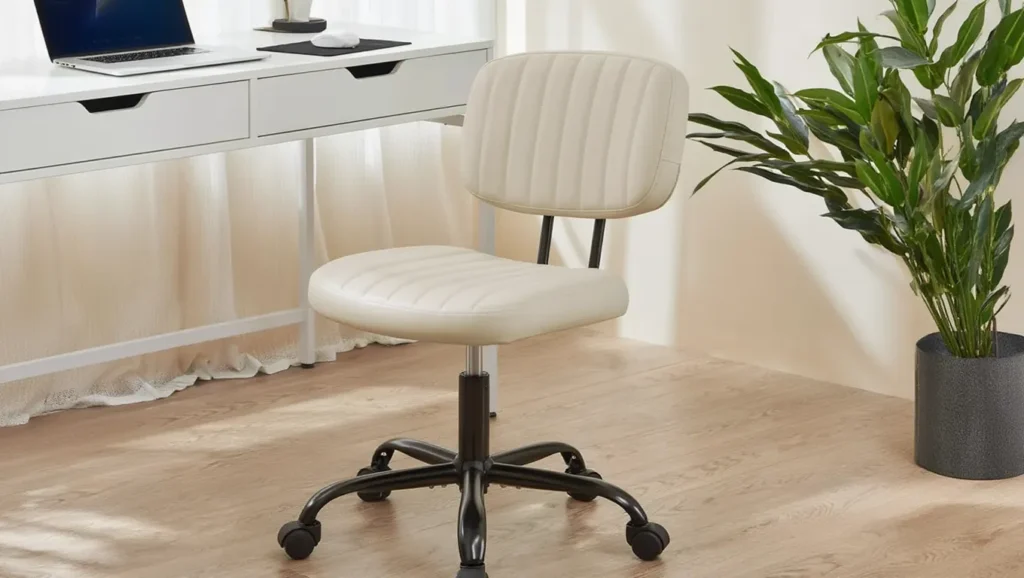
View details for: Armless PU Leather Chair.
2. Breaking the Boundary: The Fluidity of Armless Design
Traditional seating often acts as a physical container, dictating a rigid, upright posture that can feel restrictive over long periods. Modern “unrestricted seating” responds to the human need for fluidity. Armless designs remove the boundaries that once confined the body, facilitating a “Criss Cross” sitting style. This wide, cushioned seat is more than a postural choice; it is a tool for “grounding” and sensory regulation. For individuals seeking meditation or those managing the sensory needs associated with ADHD, the ability to tuck one’s legs and find a natural center of gravity provides a necessary sense of physical and mental containment.
Beyond these psychological benefits, the armless design serves a critical architectural function. These chairs can “tuck” seamlessly into the structure of a desk or vanity when idle, reclaiming essential square footage. This allows the chair to exist only when needed, disappearing into the room’s profile to reduce visual noise. However, the true value of the chair is only fully realized when the physical shape is complemented by the sensory experience of its surface.
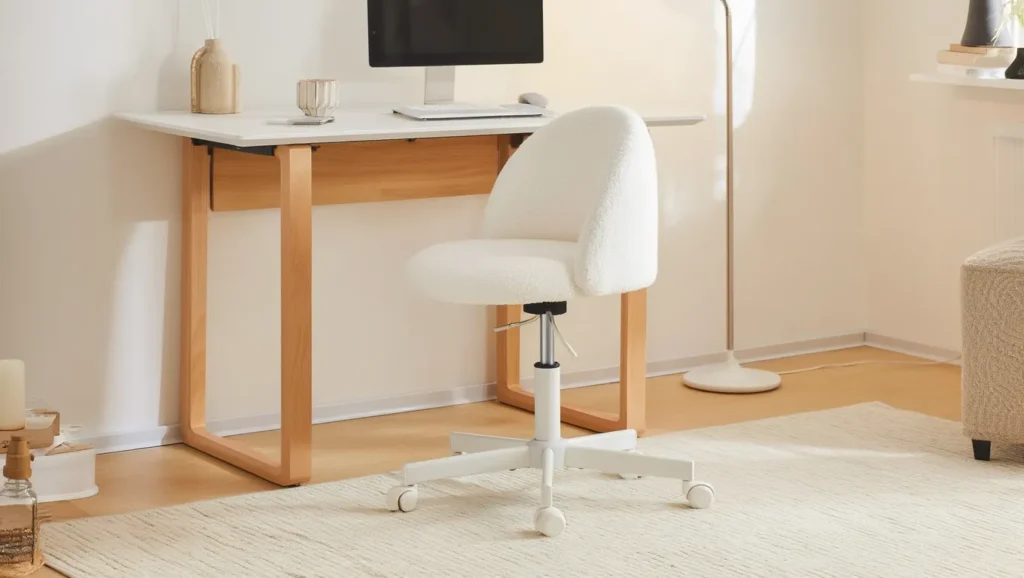
View details for: Modern Vanity Chair with Back.
3. Tactile Landscapes: Texture as a Design Tool
The haptic interaction—the way skin meets surface—defines the emotional temperature of a space. While minimalist lines provide the structure, texture provides the “warmth.” Different materials evoke distinct psychological responses. A “teddy fleece” fabric acts as a sensory retreat; its high-quality, fluffy texture softens the sharp lines of a minimalist room and lowers “visual noise” through its high light absorption. Rather than reflecting light in a clinical manner, these fabrics break up reflections, creating a perceived “softness” that invites the inhabitant to linger.
Texture also serves a functional purpose in temperature regulation. For example, the vertical grain design on PU leather is a strategic choice for air circulation. By providing a channeled surface, the material prevents the “stuffy” or “sweaty” sensation often associated with smooth synthetic covers, ensuring that the inhabitant remains physically comfortable during long periods of focus. This haptic softness, however, is only effective if it is supported by an internal integrity that prevents the body from “bottoming out” against the frame.
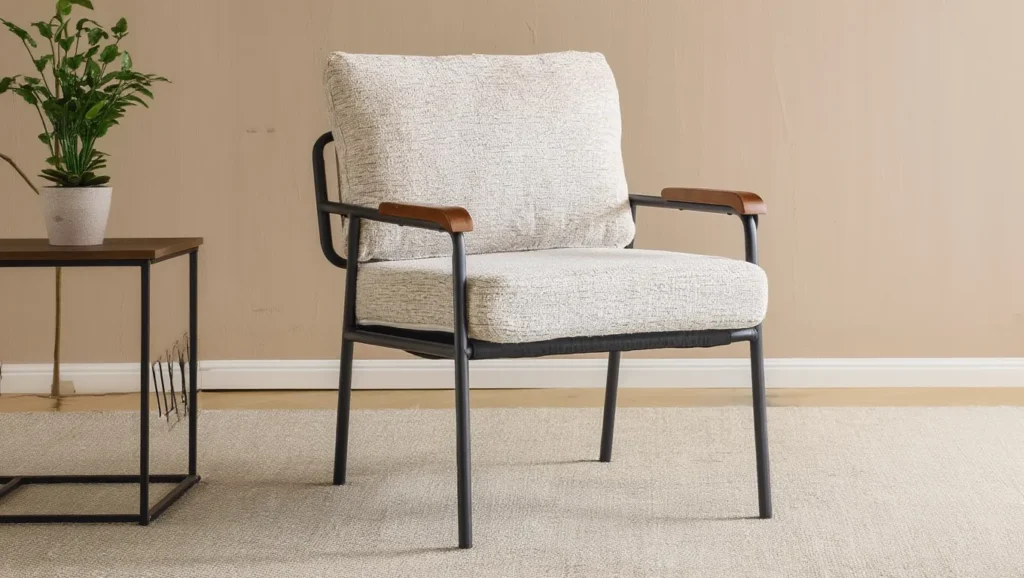
View details for: Modern Accent Armchiar for Small Space.
4. The Internal Support: Function Masked by Form
In sophisticated minimalist design, the most critical engineering is often invisible. To maintain a slim, elegant profile without sacrificing long-term comfort, chairs utilize high-density, high-rebound sponges. A compact task chair can offer significant lumbar support through integrated U-shaped systems, ensuring that the armless silhouette still protects the human spine. This internal balance is further reinforced by rigorous safety standards; certifications such as BIFMA and the use of SGS-certified cylinders provide the user with a subconscious sense of safety. Knowing the base is built for stability (supporting 250 to 300 lbs) allows the mind to fully disengage from the physical act of sitting and focus on the task at hand.
Strategic “firmness” in a cushion is a deliberate choice for longevity and spinal health, rather than a lack of comfort. High-rebound foam ensures the chair retains its supportive qualities over years of use, preventing the fatigue of poorly engineered foam. This internal harmony is the foundation upon which the chair’s external movement is built.

View details for: Criss Cross Chair with Wheels Wide Cross Legged.
5. Spatial Balance and the Nuance of Placement
A chair’s value is intrinsically tied to its location within the room’s flow. Design elements like angled legs and flared silhouettes do more than provide stability; they create a sense of movement and bridge the gap between industrial and residential aesthetics. However, placement must also account for the auditory environment. A workspace should be a sanctuary of quiet, a need addressed by the inclusion of silent wheels that allow for 360-degree rotation without disruptive noise.
When situating these pieces, one must account for the “walkway” space and the chair’s dynamic movement. A chair’s swivel capability allows the room’s orientation to shift throughout the day—turning toward natural light for morning reflection or rotating toward a desk for deep work. By ensuring the chair moves silently and stands firmly on adjustable legs, we eliminate the friction of the environment. When correctly placed, these pieces facilitate the natural transitions of our daily lives, moving with the inhabitant rather than standing in their way.
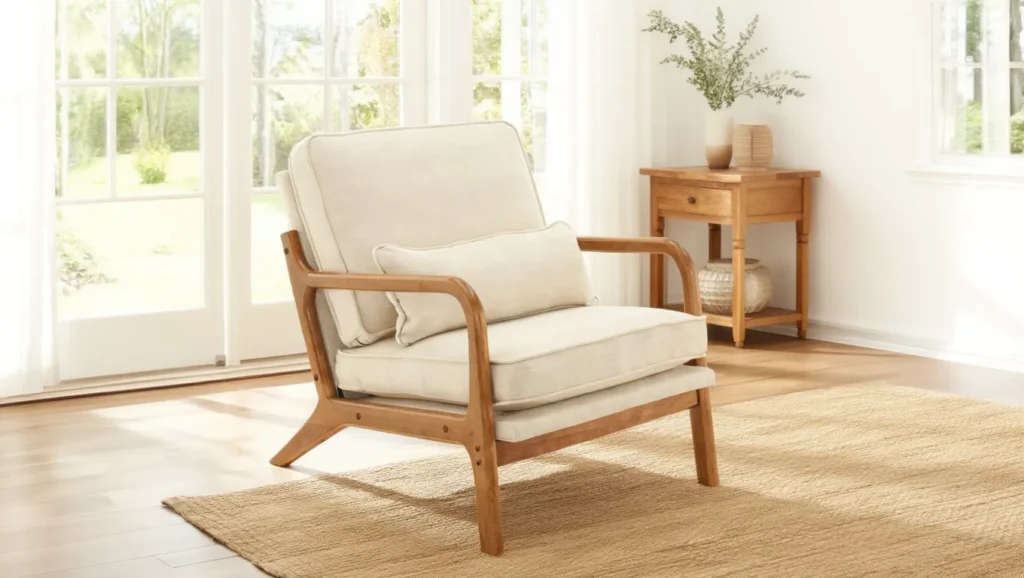
View details for: Mid-Century Modern Chair with Pillow Linen Fabric.
Conclusion: The Intentional Home
Ultimately, the process of selecting a chair is an exercise in self-awareness. It requires us to evaluate how we wish to inhabit our spaces and what kind of energy we want to cultivate in our daily rituals. A chair is never merely an object; it is a silent partner in the inhabitant’s life—the supportive base for focused work, the soft texture of a sensory retreat, or the stable anchor of a reading nook. The right piece of furniture does not simply fill a void; it facilitates a specific way of being. By choosing seating that respects both the architecture of the room and the psychology of the human body, we create sanctuaries that encourage us to live with greater intention, clarity, and peace.